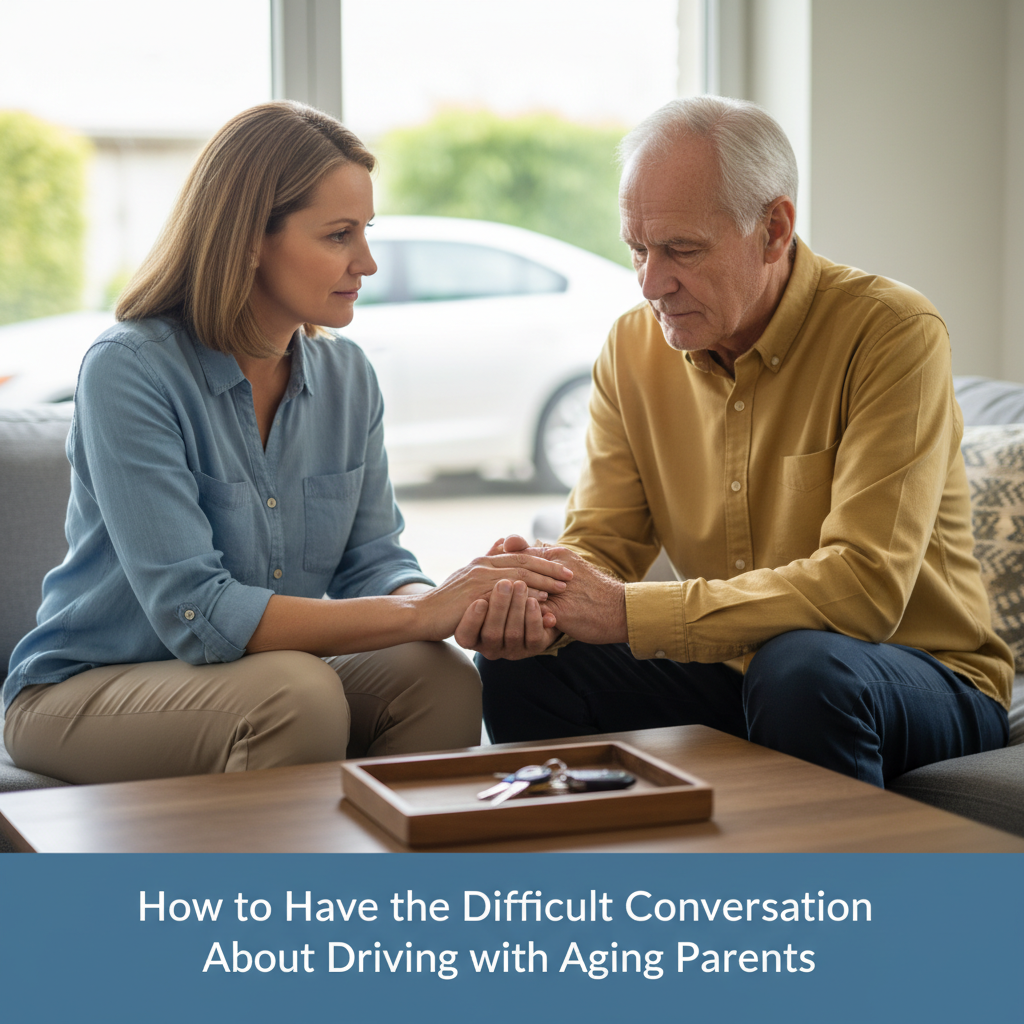
How to Have the Difficult Conversation About Driving with Aging Parents
Having the elderly parents driving conversation is one of the most emotionally charged discussions adult children face. Driving represents independence, autonomy, and identity for older adults, and suggesting it may be time to hand over the keys can feel like a direct challenge to their sense of self. Yet with approximately 48 million licensed drivers aged 65 and older on American roads, and fatal crash rates increasing significantly after age 75, this conversation is often a matter of life and death.
Recognizing the Signs That Driving May No Longer Be Safe
Before initiating the conversation, it is important to have a clear understanding of why you are concerned. Vague worries about age alone are not sufficient and are likely to be dismissed. Instead, document specific observations that indicate declining driving ability.
Warning signs include new dents, scratches, or damage to the vehicle that cannot be explained. Getting lost on familiar routes, running stop signs or red lights, difficulty merging or changing lanes, and slow reaction times at intersections are all significant indicators. Near-miss incidents, honking from other drivers, and traffic citations are concrete evidence of declining ability.
Medical conditions that affect driving safety include vision impairment, hearing loss, reduced range of motion, cognitive decline, and the effects of certain medications. A 2024 study published in the journal Accident Analysis and Prevention found that drivers with mild cognitive impairment were 2.5 times more likely to be involved in at-fault crashes than cognitively healthy drivers of the same age.
"The key is distinguishing between normal age-related changes and those that genuinely compromise driving safety," advises Dr. Marian Betz, an emergency medicine physician at the University of Colorado who researches older driver safety. "Not every older driver is unsafe, and age alone should never be the sole reason for suggesting someone stop driving."
Preparing for the Conversation
Approaching the topic with empathy and preparation dramatically increases the likelihood of a productive outcome. Begin by examining your own motivations and ensuring that your concern is based on observed safety issues rather than general anxiety about aging.
Choose a time when both you and your parent are calm, rested, and free from distractions. A private, comfortable setting is essential. Avoid raising the topic during holidays, family gatherings, or immediately after a driving incident when emotions are running high.
Consider who should be part of the conversation. In some families, the message carries more weight coming from a spouse, a physician, or a trusted friend. In others, an adult child who has a close, trusting relationship with the parent is the best choice. Having multiple family members present can feel like an ambush and should generally be avoided unless the situation is urgent.
How to Approach the Conversation with Respect
Frame the discussion around safety and concern rather than ability or competence. Use "I" statements to express your feelings rather than "you" statements that can feel accusatory. For example, "I worry about your safety when you drive at night" is far more effective than "You shouldn't be driving anymore."
Acknowledge the significance of what you are asking. Losing the ability to drive is consistently ranked as one of the most feared consequences of aging, second only to losing cognitive function. Validating your parent's feelings by saying something like, "I understand how important driving is to your independence, and I want to find solutions that keep you safe and mobile," demonstrates respect.
Listen more than you speak. Your parent may have concerns about driving that they have not shared, or they may offer insights into specific difficulties they are experiencing. Some seniors are relieved when the topic is raised because they have been privately worried about their own abilities.
Geriatric care manager Patricia Callan recommends a gradual approach. "Rather than presenting it as an all-or-nothing decision, suggest intermediate steps. Maybe they stop driving at night first, or avoid highways, or limit driving to familiar routes. Gradual reduction feels less threatening and gives the person time to adjust."
Professional Driving Assessments
If your parent disputes your concerns, suggesting a professional driving assessment can be an objective way to evaluate their abilities. Many occupational therapists who specialize in driver rehabilitation offer comprehensive assessments that include both clinical evaluation and an on-road driving test.
These assessments evaluate vision, cognition, physical ability, and actual driving performance. The results provide an unbiased professional opinion that can either confirm your concerns or reassure you that your parent is still driving safely, perhaps with minor modifications such as adaptive equipment.
State departments of motor vehicles also offer options. Some states allow family members or physicians to request a driving retest, though the process and confidentiality rules vary by state. AAA and AARP both offer driving refresher courses designed specifically for older drivers that can help identify areas of concern while also improving skills.
Transportation Alternatives
One of the most effective ways to ease the transition away from driving is to present a comprehensive plan for alternative transportation. Research the options available in your parent's community before having the conversation so you can offer concrete solutions rather than vague assurances.
Options may include public transportation with senior discounts, ride-sharing services such as Uber and Lyft, volunteer driver programs operated by local senior centers or faith-based organizations, and paratransit services for individuals with disabilities. Some communities offer specialized transportation services for seniors, including door-to-door service and accompaniment to medical appointments.
Family members can also create a shared driving schedule to ensure the parent's transportation needs are met. Grocery delivery services, telemedicine appointments, and other technology solutions can reduce the number of trips needed.
Legal Considerations
In most states, simply taking a parent's keys without their consent is not legally advisable, particularly if the parent is cognitively competent. If the parent has dementia or another condition that impairs their judgment, a legal guardian or someone with durable power of attorney may have the authority to intervene.
If a parent continues to drive despite clear safety concerns and refuses to stop voluntarily, family members can contact the state DMV to request a reexamination. Some states allow anonymous reporting. Physicians in many states are also authorized or required to report patients whose medical conditions make driving unsafe.
Frequently Asked Questions
What if my parent refuses to stop driving despite clear safety concerns?
If voluntary measures fail and you believe your parent poses a danger to themselves or others, you have several options. Contact their physician, who may be able to intervene medically. Report your concerns to the state DMV to request a driving retest. In extreme cases, disabling the vehicle or removing it from the premises may be necessary, though this should be a last resort and ideally done with legal guidance.
How do I bring up driving concerns without damaging my relationship with my parent?
Lead with empathy and respect. Acknowledge the difficulty of the conversation and the importance of driving to their independence. Focus on specific safety observations rather than generalizations about age. Offer to work together on solutions and alternatives. Remember that this may require multiple conversations over time rather than a single definitive discussion.
At what age should seniors stop driving?
There is no specific age at which all seniors should stop driving. Driving ability depends on individual health, cognitive function, vision, and physical capability rather than chronological age. Some people drive safely into their 90s, while others may need to stop much earlier due to medical conditions. Regular self-assessment, professional evaluations, and honest feedback from family members are the best tools for making this determination.
The conversation about driving with aging parents is rarely easy, but approaching it with empathy, preparation, and respect can preserve both safety and the parent-child relationship. By focusing on specific concerns, offering practical alternatives, and involving professionals when needed, families can navigate this transition in a way that honors the senior's dignity while protecting everyone on the road.
Written by